
What Is Emotional Whiplash?
Why unpredictable relationships can leave you confused, anxious, and questioning where you stand.

Emotional whiplash describes the confusion and emotional instability that can occur when someone’s behaviour repeatedly shifts between opposing states, such as warmth and withdrawal, reassurance and rejection, or closeness and distance. These sudden changes can make it difficult to know where you stand with someone, leaving you constantly trying to make sense of what changed or questioning your own sense of reality.
Few things in life are as destabilizing - or downright crazy-making as emotional whiplash.
Maybe you thought you knew exactly where you stood with someone, and then suddenly, they did a complete 180. One day, you were their favorite person in the world. The next, you felt more like an inconvenient acquaintance.
Yesterday, they were making plans with you, confiding in you, or telling you how much you meant to them. Today, you’re getting one-word replies, wondering whether you somehow imagined the entire relationship, and have accidentally become the delusional side character in somebody else’s story?!
It can leave you feeling like you somehow missed a few chapters of the story. You were sure you were the hero when you went to bed, only to wake up as the villain in someone else’s version of events. And the most confusing part? You probably have no idea what changed.
So you start mentally retracing your steps. You replay conversations, analyze their tone, and search for that elusive moment when everything supposedly shifted. But sometimes, there is no clear moment. All you know is that there has been a major, unwanted plot twist - and somehow, you’ve been cast in a completely different role without ever auditioning for it.
If you’ve been left feeling hurt, disoriented, and deeply confused by someone’s sudden reappraisal of you, you’re not alone. To understand why this kind of sudden shift can feel so destabilizing, it helps to look at what emotional whiplash actually is - and what makes it different from ordinary conflict, changing moods, or a relationship simply drifting apart.
What Is Emotional Whiplash?
Emotional whiplash isn’t a formal clinical diagnosis or a single psychological construct. It’s an everyday term to describe the emotional disorientation that can occur when someone’s behaviour repeatedly shifts between opposing states.
What makes emotional whiplash so destabilizing is not only that another person changes their mood or behavior. It’s the speed, contrast, and unpredictability of the shift. The change may be dramatic or subtle, but either way, it can leave you scrambling to understand where you suddenly stand.
This can create a sense of relational uncertainty - uncertainty about where you stand with another person and how secure the relationship really is. Research has linked relational uncertainty with heightened stress during difficult interpersonal interactions, which helps explain why sudden changes in another person’s behaviour can feel so emotionally unsettling.
Research on interpersonal unpredictability, inconsistent responsiveness, relational uncertainty, approach–avoidance dynamics, and intermittent social reinforcement offers several ways of understanding why these patterns can become so stressful and difficult to make sense of.
These research areas don’t describe one single condition called “emotional whiplash.” Instead, they offer different pieces of the same puzzle: what happens when the emotional signals we receive from another person become inconsistent, contradictory, or difficult to predict.
Where does Emotional Whiplash Show Up?

Emotional whiplash can happen in any relationship where someone swings between warmth and coldness, closeness and distance, approval and rejection, or safety and tension so quickly that you struggle to keep up.
Romantic Relationships
Romantic relationships can be particularly destabilizing because they often involve a high degree of emotional intimacy, vulnerability, and attachment.
Emotional whiplash might look like intense affection followed by sudden withdrawal, reassurance followed by rejection, or someone pursuing closeness only to pull away once intimacy increases. This kind of push-pull dynamic can sometimes appear in relationships involving insecure attachment patterns, including fearful-avoidant attachment.
It can also occur in emotionally abusive relationships, where periods of affection, apologies, or intense closeness alternate with criticism, punishment, withdrawal, gaslighting, or hostility.
Over time, you may find yourself becoming increasingly preoccupied with getting back to the “good version” of the relationship, and increasingly anxious whenever you sense another shift coming.
Examples:
- You and your boyfriend had an amazing long weekend together. You bonded, shared stories, laughed, and made future plans - but the next day, they act distant, aloof, and cold. You wonder if you imagined the closeness.
- Your crush disappears for months, suddenly reappears wanting intense closeness, behaves as though you have a 'special bond', then disappears again once their ego has been stroked.
- Someone repeatedly tells you they want you around, but when you become emotionally close, they accuse you of being “too much,” needy, or intrusive. When you pull away, they complain that you’re distant.
- Your wife explodes at you, says extremely hurtful things, then appears cheerful the following morning and expects you to behave normally. You’re still registering what the heck happened while they have apparently moved on.
Family Relationships
Family dynamics can create a particularly deep form of emotional whiplash because our earliest relationships often shape our sense of safety, belonging, and identity.
A parent might be affectionate and supportive one moment, then critical, emotionally withdrawn, or disapproving the next. In more dysfunctional family systems, one family member may alternate between being praised and blamed, included and excluded, or treated as valuable and then suddenly positioned as the problem.
This can be especially confusing in families involving scapegoating, enmeshment, conditional approval, or unpredictable caregiving. Because these patterns can begin early in life, you may not initially recognize them as inconsistent. Instead, you might learn to monitor other people’s moods, suppress your own needs, or constantly adjust yourself to maintain connection.
Examples:
- Your mother praises you enthusiastically when you behave in a way they approve of, but becomes noticeably colder when you assert a boundary, disagree with them, date someone they dislike, change careers, or become more independent.
- An uncle greets you warmly, jokes with you, and acts delighted to see you - then makes a cutting remark, criticises you, or brings up something embarrassing in front of everyone. Ten minutes later, they’re acting as if nothing happened.
- A child comes home not knowing whether their parent will be affectionate and playful, withdrawn and silent, or angry over something minor. Even when nothing dangerous happens, that unpredictability can create a constant sense of emotional instability.
Friendships
Emotional whiplash in friendships can be surprisingly painful, particularly when you believed the friendship was secure. A friend may make you feel incredibly important when they need support, company, or validation, only to become unavailable when you need the same in return. You may feel like an essential part of their life one week and strangely peripheral the next.
It can also show up through exclusion, competition, jealousy, or shifting social alliances. Someone might be warm and affectionate in private but distant around certain people, enthusiastically include you in plans and then leave you out, or suddenly become cold without explaining why.
The result can be an uncomfortable sense that you’re never quite sure whether you’re in the club or standing outside it.
Examples:
- Your friend confides in you constantly and relies on you for emotional support, but when you need them, it's a different story. They're suddenly 'unavailable'. Then the next time they have a crisis, they suddenly want to be close again.
- Someone is enthusiastic and inclusive with you one day, then ignores you in front of other people or excludes you from plans the next. You start wondering, “Are we actually friends? Did I do something?”
The Workplace
Emotional whiplash can also happen in professional relationships.
A manager may enthusiastically praise your work one day and heavily criticize you over a relatively small mistake the next. A colleague might behave like a close friend privately but become noticeably distant or shun you in front of senior staff or other coworkers.
Mixed messages around performance can be particularly destabilizing. Being told you’re highly valued while simultaneously being excluded from decisions, overlooked for opportunities, or treated as though your position is insecure can leave you constantly second-guessing where you stand.
Over time, an unpredictable workplace can leave you monitoring tone, rereading emails, overanalyzing feedback, and trying to anticipate which version of a person - or workplace culture - you’re going to encounter that day.
Examples:
- A colleague treats you like a close friend privately: sharing personal information, messaging outside work, telling you how much they value you - but becomes formal, aloof, or even critical toward you around certain colleagues or managers.
- Your manager tells you that you’re doing brilliantly and that they trust you completely. A few days later, they harshly criticise a small mistake and make you feel as though your job is at risk. Then they return to praising you again.
What makes these situations feel so destabilizing is often the contrast, not simply the negative behaviour itself. Consistent coldness hurts, but at least it gives you something stable to interpret. Emotional whiplash keeps changing the emotional rules.
One minute your nervous system receives:
“I’m safe here. I belong. This person values me.”
Then suddenly:
“Something’s wrong. Maybe I’m unwanted. I need to fix this.”
And then the warmth returns before you’ve even worked out what happened.
Is Emotional Whiplash Intentional?
Not always.
Sometimes, emotional whiplash is the side effect of psychological processes that are happening largely outside a person’s conscious awareness. For example, someone with an avoidant attachment pattern may become warm and connected when they feel emotionally safe, then suddenly pull away when intimacy starts to feel threatening. Avoidant deactivation can change how they perceive both the relationship and the other person, sometimes making closeness feel uncomfortable almost overnight.
Mood-congruent memory may also play a role. Our current emotional state can influence which emotionally consistent memories and interpretations become most accessible, meaning that someone who feels angry, threatened, or disconnected may temporarily find negative aspects of the relationship easier to retrieve. Difficulties with object constancy may contribute too. If someone struggles to hold onto a stable sense of another person when they are upset, disappointed, or emotionally activated, their view of that person can shift dramatically in the moment.
In other cases, emotional whiplash may be intentional.
It may form part of gaslighting, emotional manipulation, coercive control, or narcissistic abuse, where affection, approval, withdrawal, criticism, or reconciliation are used strategically to destabilize another person or keep them emotionally off balance. The sudden switch may not be accidental at all.
The sudden switch may not be accidental at all. Warmth might be used to pull someone back in, while withdrawal becomes a form of punishment. Just enough reassurance may then be offered to restore hope before the pattern starts all over again.
And then there is the least satisfying explanation of all - sometimes, people are just naturally flaky.
They may be impulsive, inconsistent, emotionally immature, unreliable, or naturally prone to changing their mind. Promises are made and later forgotten or abandoned. They may feel intensely in one moment and differently the next, speaking with certainty about things they haven’t really thought through. They might not intend to confuse anyone - they're just as changeable as the weather, and people get caught up in their storms.
At the end of the day, intent matters when we are trying to understand why someone behaves the way they do. But when it comes to the impact on you, repeated unpredictability can still be destabilizing, whether it was calculated, subconscious, or simply part of someone’s personality.
The Effects of Emotional Whiplash
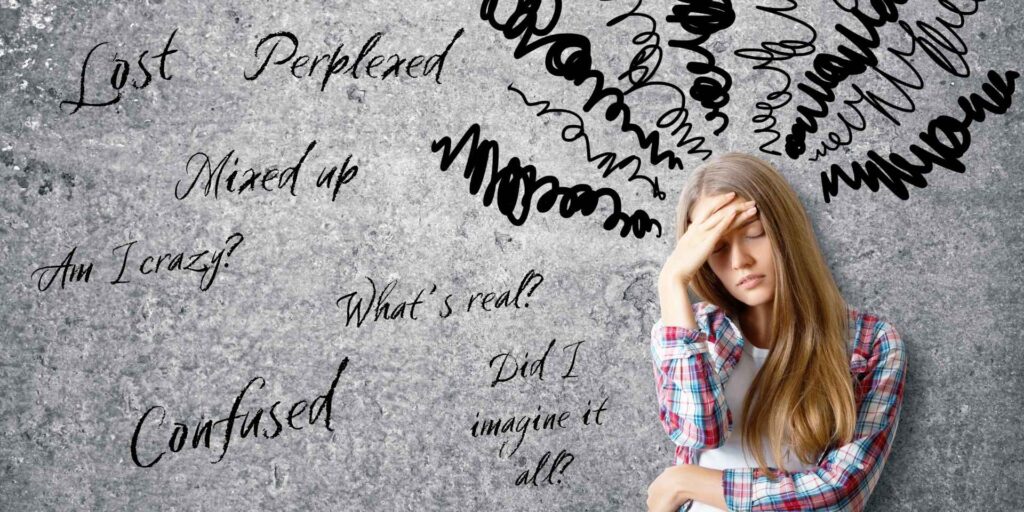
Emotional whiplash can affect someone very quickly because the nervous system is constantly having to adjust to contradictory signals: closeness, then rejection; reassurance, then criticism; warmth, then withdrawal.
Short-term effects
In the immediate aftermath, people often experience:
- Confusion: replaying conversations and trying to figure out what changed.
- Rumination: repeatedly analysing messages, tone, facial expressions, or events.
- Anxiety and hypervigilance: watching closely for signs that the other person is about to become cold, angry, or distant again.
- Emotional dysregulation: feeling calm one minute, then suddenly anxious, angry, tearful, or panicked.
- Self-doubt: wondering if you imagined the closeness or did something wrong.
- Difficulty concentrating: so much mental energy is being spent trying to understand the relationship.
- Sleep disruption: especially after conflict, withdrawal, or sudden rejection.
- Physical stress symptoms: tension, nausea, racing heart, headaches, loss of appetite, or fatigue.
- People-pleasing or reassurance-seeking: trying to restore the “good” version of the relationship.
- Walking on eggshells: Being extremely careful about what you say or do to avoid another abrupt shift.
One particularly important short-term effect is that the return of warmth can bring enormous relief. That relief can make the relationship feel even more emotionally significant, because the nervous system begins associating the person not only with distress, but also with the ending of that distress.
Long-term effects
If inconsistency becomes a repeated pattern rather than an occasional conflict, the effects can become much more deeply ingrained.
People may develop chronic hypervigilance, where they become highly sensitive to subtle changes in mood, tone, texting patterns, or body language. Instead of simply experiencing relationships, they start monitoring them. It can also gradually erode self-trust. If someone repeatedly receives contradictory information -
“I love having you around”
followed by rejection, or
“you can always talk to me”
followed by punishment for speaking honestly - they may stop trusting their own interpretation of what is happening. Over time, this can contribute to:
- Lower self-esteem
- Fear of abandonment or rejection
- Difficulty setting boundaries
- People-pleasing
- Increased relationship anxiety
- Difficulty relaxing around other people
- Emotional exhaustion
- Avoidance of conflict
- Difficulty trusting consistency when it finally appears
- Becoming unusually sensitive to perceived withdrawal
- Staying in unhealthy relationships longer because periods of warmth restore hope
There can also be a learning effect. The nervous system begins to expect instability.
Someone may unconsciously learn:
“Closeness can disappear without warning.”
Or:
“If someone becomes distant, I need to work harder to get them back.”
That expectation can follow them into completely different relationships, even when the new person is much more stable.
And when emotional whiplash is combined with intermittent reinforcement, the attachment can sometimes become stronger rather than weaker. The unpredictable return of affection, attention, or approval can keep someone emotionally invested because they remain focused on getting back to the good periods.
How to Break the Emotional Whiplash Cycle
When someone’s behaviour keeps shifting unpredictably, it can be tempting to spend all your energy trying to understand why. Why did they change? What did you do? Which version of them is the “real” one?
But at some point, constantly trying to solve the mystery becomes part of the cycle. Breaking free from emotional whiplash is less about becoming better at predicting someone else’s moods and more about learning to trust the pattern in front of you, protect your own emotional stability, and stop allowing someone else’s latest shift to dictate how you feel about yourself.
- Recognize the pattern instead of treating every shift as a new mystery.
- Stop chasing clarity from the person who keeps creating confusion.
- Pay attention to patterns, not isolated good moments.
- Reduce exposure where possible - boundaries, lower contact, or no contact if appropriate.
- Ground yourself before reacting to sudden changes.
- Reality-check what happened by journaling or keeping notes if you tend to doubt yourself.
- Stop making their latest mood the measure of your worth.
- Build consistency elsewhere: supportive people, routines, sleep, work, hobbies, therapy or coaching.
- Ask whether the relationship is actually safe and sustainable, rather than only whether the person “cares.”
- Accept that sometimes closure comes from the pattern itself, not from an explanation.
The end goal should never be to become better at surviving emotional whiplash. It is to become less available for relationships that require you to constantly tolerate it.
FAQs
Emotional whiplash can leave you feeling as though you need one final conversation, one missing piece of information, or one perfectly logical explanation before everything will finally make sense.
Sometimes, you get that explanation. Sometimes, you don’t.
But repeated inconsistency is information too. If someone continually leaves you unsure where you stand, scrambling to interpret sudden changes, or questioning a reality that seemed perfectly clear yesterday, you don’t have to keep auditioning for a more stable role in their life.
You are allowed to stop studying the plot twists. You're allowed to trust the pattern. And perhaps most importantly, you are allowed to choose relationships where warmth doesn’t come with an expiration date and emotional safety doesn’t disappear without warning.
Other articles you may find interesting:



Why hot-and-cold love can be so hard to walk away from.
The signs, psychology, and how to break free.
Understanding the signs, triggers, and push-pull cycle.